There are a number of variations on these units, there is complete garbage, a few gems and a bunch that are okay. Many of the systems use licensed games from the arcades or consoles of the 1980’s or games made to promote (cash in on) current celebrities, movies and TV shows.
Most of the games are uniquely coded for that companies game units hardware. That being said many companies seem to use the same base NES on a chip. This makes some sense as they are cheap and plentiful.
The generic compilations tend to be poorest of the units. The games don’t have any real appeal and are often poor copies of games from early consoles or the arcades. There is no licensed material and the units tend to be poorly built. The games generally have little replay value, although there is usually one that is of a reasonable quality to keep your interest for 5 minutes. That being said if you have never played video games or need something to keep young children busy for half an hour these units might be okay. Just don’t spend more than $5 or $10 dollars.
Some of the licensed property are not much better than the generic ones. The big advantage to the licensed games is you have a name that the population or at least part of it knows. You would think the games should be better as there is something to base it off of. Old licensed games are okay overall but some systems should be left alone.
Now with Movie and TV licensed products it varies greatly. Be it an original story or something that happens in a movie on on a TV show, often the game is a rehash of something we have seen before. Many of them are very similar with different graphics and sound and often have little relation to the show they promote. Except for using the characters from the show and the name. Not to mention a general lack of variety, these film and TV licensed units often have no more than 5 games. These games may just be variations on the original or simple difficulty settings. However they general play well on the controller they are written These TV and Film licensed products tend to have the shortest shelf life too, the occasional one survives. These devices strike me as much as money grabs or just promotional aids that they can get us to pay for.(Because little Dick or Jane wants it.)
No matter what you think about these games they seem to have become popular items since they hit the market some 10 years ago. Many of them are designed as one shot deals or they could last for a couple of years but they have no real staying power. They have included just about everything, fishing games, paint ball games, action and adventure games, casino games, sports games, fashion games and many TV and Movie based games, from the likes of The Fantastic Four, Spiderman, Dora, Sponge Bob and Hanna Montana to Jeopardy, Deal or No Deal, Party Poker and others.
Most of these games will have at least one game with an easy and hard version although some have more games or variations. There are some that have only one game, even some of the retro arcade ones are only a single game.
The controllers are usually designed around a Joystick or Game pad, there are exceptions like Dance Mats, Inflatable Cars, Skate boards, Light guns and a few other custom designs. Some can even take a simple cartridge to unlock new levels or characters, like the Jakks Game Key series. There are even wireless versions available for many of the game units. These are often modified versions of the same corded version. They of course tend to take twice as many batteries.

This article came into to being as I was writing the Atari Flashbacks article and
the Mame Cabinet article. In the Flashback article I discussed the Atari 2600 and
various Atari Plug and Play style systems. In the MAME Cabinet article it is about
Arcade emulation and building a multi-
A Plug and Play TV Game or games in a joystick or direct to TV game is a video game that plugs into your television usually with RCA connectors. They are self contained systems, and do not need or use other media or devices to play a game. They are also portable and generally can not be easily upgraded or modified. Different manufactures call them by various names, the key is you just plug them into the TV and start playing. Well you need to put some batteries in first.

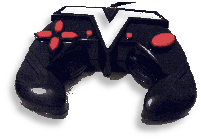
What is a Plug and Play TV Thing a Ma Job.
As said most of these devices use the NES on a chip or a variation of it, a single chip version of the Nintendo Entertainment system. The games specifically written for this platform tend to be not bad at all. However many of the retro games are rewritten, ported or otherwise made to function on this hardware. This causes problems with some games no matter how they were done. The sound often isn’t the same or colours are wrong and other little problems creep into the games. This is easily understandable as the games were not designed to run on the NES hardware. Some work better than others or the programming team paid more attention to getting it right. There are some notable exceptions to the rule like the Atari Flashback 2 that is a real Atari VCS/2600 on a chip, but is more of a small console than a portable device. The Commodore 64 Joystick unit is a Commodore 64 system on a chip and there is the Power System 3 that does use a NES chip but it plays NES games so it makes sense. There are also a few that seem to use some custom chips that are not NES but proprietary to the system or manufacturer. These other proprietary chips have various results, depending on what they were trying to achieve If it is a new product it will probably be fine. If it is a remake it could go either way.

The retro units vary greatly in quality although they are licensed games and there is no reason for them not being done right many suffer from bad translation. The Intellivision ones are very poor. Then there is the Coleco handhelds that have been ported to a plug and play game, but never used on a TV in the first place. The Arcade TV Games are overall very well done and seem to be of a reasonably solid construction. Many of the home console plug and play units are not so durable or they sure don’t feel very solid and the games are often not as well implemented. Although the Genesis, Atari Paddles and even the Techno Max Activision are all reasonably good units for both game selection, playability and construction. The Atari 10 in 1 joystick is passable. Some companies have made obvious attempts to create a good retro game experience in the controller, they don’t always succeed though.

Much of what I have seen makes me think those giving out the licenses don’t really care too much about the end product as long as they get some money. For some of the older games and license I can see this approach, but newer properties should probably take more interest in the final games.
I haven’t figured out the marketing behind these tv game units, some of it seems aimed at adults who remember the games and the retro market. For the most part though they seem to aimed at the tween thru teen market with some aimed at younger kids like the Dora and Blues Clues games.
The real problem is that the graphics on many of these units do not compare to a modern console and will just not impress teens and most tweens. it is probably nostalgic adults that will be the ones that play the retro games most, even if they were bought for Johnny or Sally. Younger children that have not yet been introduced to the world of console and computer games may find them enjoyable for a time, especially while bored at grandmas.
These games have become throw away and I do not think you are suppose to keep them for a long time. They are not good for the landfill but there is also no reason to keep them after you are bored with it. I think of it like this if the unit cost me $15.00 I need to get about 2 hours of play out of it as this is about how much it would cost to go to movie for a couple of hours. If we converted it to playing games in arcades well it is at least a buck a play, so you only have to play it 15 times to pay for it. Every time you play it after that is extra, of course you could factor the batteries in, but it still doesn’t take long to pay it off, so to speak.
I guess that about sums it up for this one.
If you would like to see an incomplete but good list of plug and play TV games and
some images of the more interesting ones check out The Unofficial list of Plug and
Play TV games part of the Retrogaming Roundtable at Digital Press -




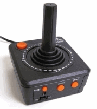
I felt compelled to do a bit on the plug and play game controllers that I had acquired during other quests and my thoughts on a plug’n’play arcade.
Ii is a bit of a mind spew so please excuse the writing.
